
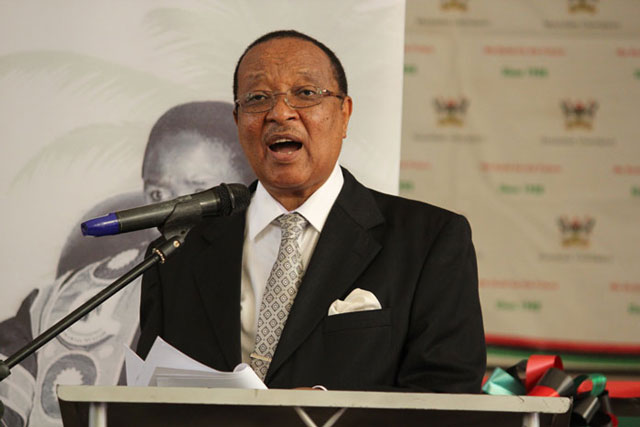
My interaction with Apolo Nsibambi dates back to our school days in 1959 when I was coming in and he was leaving King’s College Budo. Then I spent three years with him at Makerere University – 1962-1964 – both of us doing a B Sc. (Economics) degree course in a class of only five students. Later, we served together in the NRM government as Ministers, and later him as Prime Minister. Lastly, when he was Chancellor and Prime Minister, I was Makerere University Council Chairman.
Apolo Nsibambi was a deeply principled, socially detached individual given to intellectual discourse, a relentless pursuit of knowledge and a search for truth. He valued a few chosen friends and maintained their friendship throughout his life. He was a family man, and upheld the ethics inculcated in him by his father who was an ardent member of the East African Christian Revival Movement.
He held a universal overview of society and was apolitical in the Uganda political context. He was committed to Buganda federalism but rejected Buganda extreme nationalism. He believed in national unity and was critical of NRM’s failure to chart out a course for national reconciliation and transition.
My memory of Nsibambi is and will remain one of our enduring friendship and parity in political thought. He sought me out of my retirement and asked me to help him deal with the perennial Makerere staff stand-off with government over terms and conditions of service when he was Chancellor. We stood together in the Council of Elders over the question of political transition.
But what stands out most for me personally is the small hand-written note Nsibambi wrote to me in Parliament after I made my resignation statement:
“Your defense was powerful. Your resignation has touched many people; some people wept. Thank you for serving Uganda.”
This memorial for Apolo Nsibambi should not be just to honour his memory but also to face the constitutional and political challenges that Apolo lived through and participated in, attempting to reach their resolution.